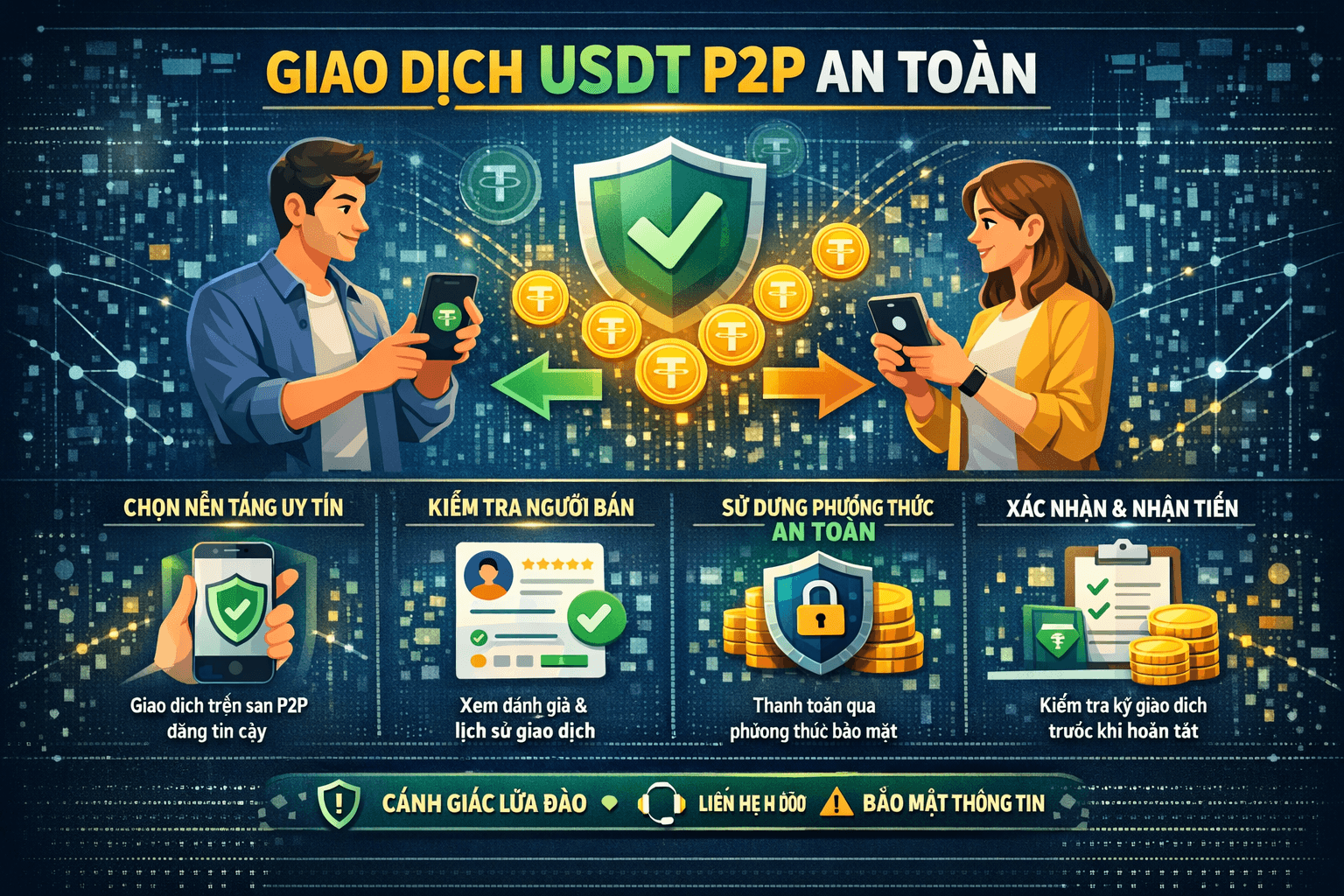
USDT is the most popular stablecoin in the world, however, transparency about reserves has always been a sensitive issue.
Tether Limited has continuously published reports to verify the reserve assets, but investors still question: is USDT actually fully backed or just partially?
This article analyzes the types of audit reports, the differences between full audits and attestations, as well as the impact on market confidence.
1. Full Audit vs Attestation
1.1. Full Audit
A full audit according to GAAP or IFRS confirms all assets and liabilities.
Includes bank confirmations, legal documents, investment portfolios.
Allows the market to know with certainty that 1 USDT is always backed by 1 USD or equivalent assets.
1.2. Attestation
Is a report by an audit firm confirming part of the assets, not auditing everything.
Tether performs periodic attestations by Moore Cayman, to confirm the assets are sufficient to back the current USDT.
Limitations: not legally binding like a full audit, difficult to prove 100% accuracy.
2. Tether's Audit Report History
2.1. Early Days
Tether initially did not have independent audits, only published bank balances.
Trust was based on the history of maintaining the 1:1 peg.
2.2. Periodic Attestation Reports
Since 2019, Tether has published quarterly attestation reports.
Contents: total USDT issued, total reserve assets, cash and commercial paper reserve ratios.
2.3. Significant Changes
Tether emphasizes that reserves include cash, commercial paper, loans, bonds, and other assets.
The direct cash ratio (USD) has decreased, increasing reliance on commercial paper and riskier assets.
3. Analysis of Recent Reports
3.1. Reserve Composition
About 50–60% of reserves: cash & equivalents
About 40–50%: commercial paper, corporate bonds, loans
This ratio indicates USDT is no longer 100% backed by real USD, but still maintains the peg through arbitrage and tight reserve management.
3.2. Transparency
The report provides detailed figures to the market.
However, it cannot prove 100% backing instantaneously, especially in cases of mass withdrawals.
4. The Impact of Audits and Attestations on Trust
4.1. Market Confidence
USDT is the backbone of liquidity in Crypto, especially on Asian exchanges.
Attestation reports help increase investor confidence, reducing the chances of short-term peg losses.
4.2. Existing Risks
If Tether loses its peg, smaller investors will not be able to withdraw 1:1 with USD, creating FUD and mass sell-offs.
Transparency in reporting only reduces risk, it does not eliminate it completely.
4.3. How the Market Manages Risk
Major exchanges often require attestation reports before listing USDT.
Smart investors diversify their investments, not putting all their funds into one type of stablecoin.
5. Lessons from History
Transparency is critical: The market will only trust USDT if reports are clear and periodic.
Stablecoins need independent audits: Attestations provide temporary assurance, but full audits enhance long-term trust.
Diversify reserve assets: Do not rely too much on commercial paper or related loans, reduce systemic risk.
Regular monitoring: Investors should track quarterly reports and changes in reserve structure.
6. Advice for Investors
Check the latest attestation reports on Tether's official website.
Split USDT investments among other stablecoins (USDC, DAI) to reduce risk.
Do not trust "100% USD" without verifying against official reports.
Keep an eye on legal events related to Tether, especially NYAG or SEC rulings.
Conclusion
Tether's audit and attestation reports are important tools to build market confidence, but there are still notable limitations:
Attestation is not a full audit → risks still remain.
Reserve composition includes commercial paper, loans → increases the volatility risk of the peg.
Smart users monitor regularly, diversify stablecoins, and combine hot/cold wallets to optimize benefits while minimizing risks.
USDT remains the backbone of Crypto liquidity, but understanding transparency and risks can help investors use it safely and effectively.