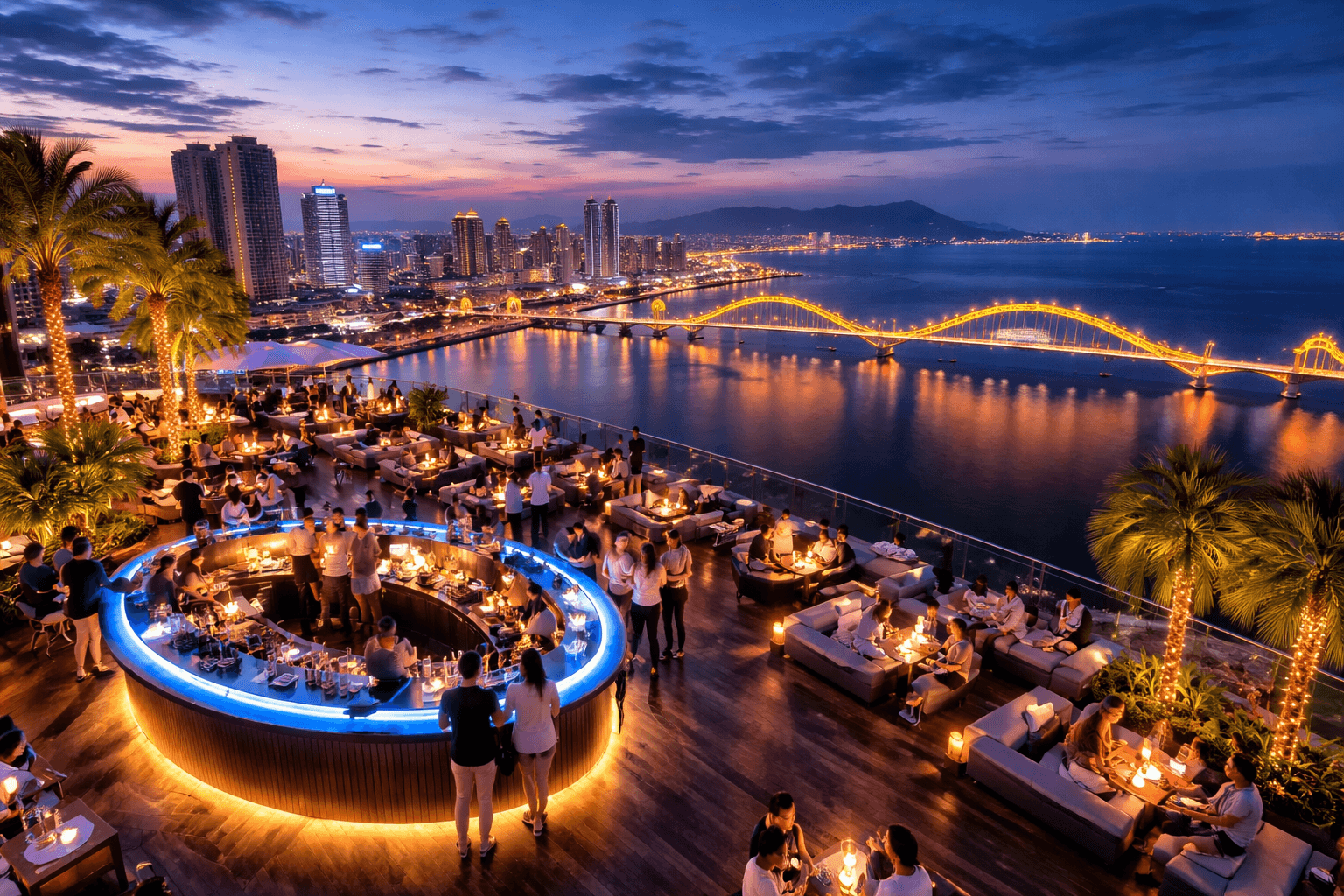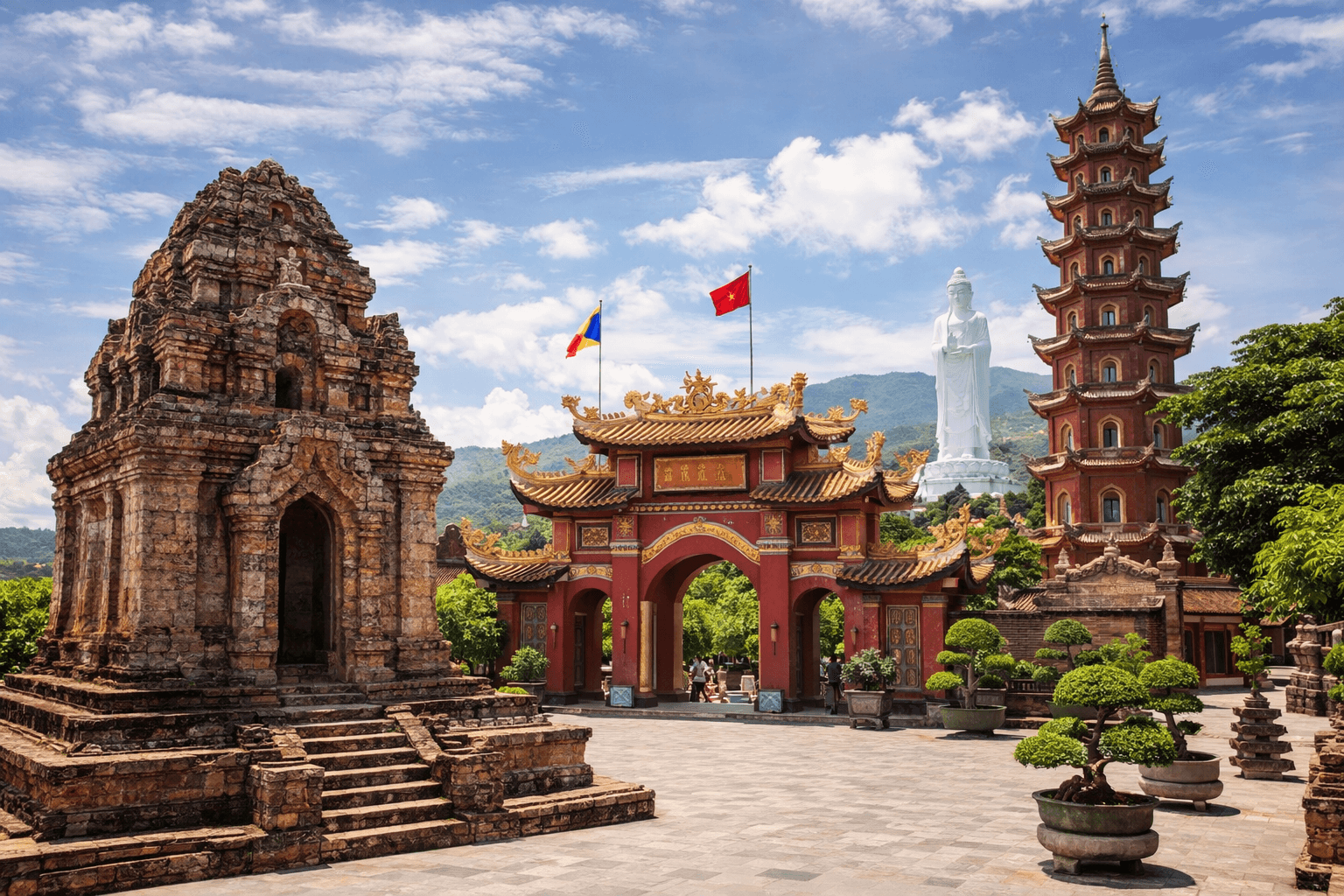
Many tourists often misunderstand Da Nang as a newly emerging city. But in fact, this land (formerly known as Cua Han) has been a bustling trading port, a significant international trade gateway for many centuries. Here is the intersection of the ancient Sa Huynh culture, the brilliant Champa civilization, and the heroic Đại Việt.
If you want to understand the soul of a city, don't just look at the skyscrapers, look at the weathered walls. Below are 5 historical sites that anyone who loves culture must visit at least once.
Cham Sculpture Museum (Cham Institute) – a treasure of a thousand years
Address: 02 September 2 Street, Hai Chau District (right at the end of Dragon Bridge).
At the top of the list cannot be any name other than this. This is where the soul of the ancient Champa kingdom is preserved, and it is also the largest museum displaying Cham artifacts in the world.
Historical story:
Built by the French in 1915, this building itself is a unique architectural monument with a Gothic style combined with Eastern domes. Here, it is not just a museum; it is a temple of art.
Guide's experience:
Stepping in here, you will feel time stand still. The space is quiet, with only the faint scent of frangipani (the museum courtyard is home to many ancient frangipani trees).
You will admire national treasures made of sandstone:
Tra Kieu Altar: A masterpiece of exquisite sculpture down to the millimeter, telling the story of the wedding of god Rama.
Tara Bodhisattva Statue: Mysterious and transcendent beauty.
The soft Apsara dancer statues, the solemn deities of Shiva, Vishnu... all appear alive as if the ancient artisans had breathed life into the stone.
Advice: Consider renting an audio guide or going with a tour guide. If you simply glance over, you will only see lifeless stones. But if you understand the story behind, you will see a brilliant civilization coming back to life.
Dien Hai Citadel – the first steel shield
Address: 24 Tran Phu, Thach Thang, Hai Chau.
Located in the city center, surrounded by modern glass buildings, Dien Hai Citadel quietly stands as a soldier telling the story of war.
Historical story:
This is the most important monument, marking the event when French colonists fired shots to invade Vietnam for the first time in 1858. Under the command of the general Nguyen Tri Phuong, the people of Da Nang relied on this citadel to hold back the French-Spanish coalition for 18 months, thwarting their plan for a 'quick win.'
Guide's experience:
Don't miss the cannons (artillery) made of cast iron weighing tons that were excavated and displayed right on the premises. Touching the cold, rough metal, tinged with the marks of time, you can imagine the intensity of the bombardments back in the day.
The statue of General Nguyen Tri Phuong stands tall, with resolute eyes looking out towards the sea as if still guarding the peace of the country day and night.
Ngũ Hành Sơn (Marble Mountains) – a legend within the stone
Address: Huyen Tran Cong Chua Street, Ngũ Hành Sơn District.
Many think Ngũ Hành Sơn is just a place for sightseeing or visiting temples for good luck. But for historians, this is a 'natural history museum' on a grand scale.
Historical story:
The system of caves in the Thuy Son mountain has not only spiritual significance but also served as a secret revolutionary base during both resistance wars.
The most special is the Huyền Không Cave. During the Vietnam War, this giant cave once served as a field hospital for the wounded, a hiding place for revolutionary officials.
Nowadays, when you enter the cave, if you pay attention to the ceiling, you will still see large holes letting light shine through – remnants of American bombing, inadvertently creating an ethereal beauty of the 'heavenly well' for the caves today.
Guide's experience:
Be sure to visit Tam Thai Pagoda – an ancient temple built from the Later Le dynasty (1630). The sign 'Ngự Chế' gifted by Emperor Minh Mang is still preserved.
Standing on Vọng Giang Đài, looking down at the winding Co Co River – which was once a vital waterway linking the ancient trading port of Hoi An and Da Nang, you will see the changes of an entire land.
Hai Van Gate – The best stronghold under heaven
Address: Hai Van Pass summit, the boundary between Da Nang and Thua Thien Hue.
Recently renovated and opened again, Hai Van Gate is currently the hottest destination for history lovers.
Historical story:
Built during the Tran dynasty and significantly renovated during the reign of Emperor Minh Mang (Nguyen dynasty), Hai Van Gate is one of the most important military checkpoints along the North-South Highway. This place has witnessed numerous military marches and fierce battles from the feudal era to the wars against the French and Americans.
The bunkers built by the French and American armies right next to the ancient brick gate create a strange yet highly symbolic contrast about the layers of history.
Guide's experience:
Standing at the gate, where the mountains meet the clouds, you will understand why Emperor Le Thanh Tong bestowed upon this place the six golden words 'Thien Ha De Nhat Hung Quan'.
The feeling of touching the restored stone slabs (ancient bricks from the Nguyen period), walking on the stone path that our ancestors once walked, gazing out at Lang Co Bay (Hue) on one side and Da Nang Bay on the other... is truly sacred and overwhelming.
K20 Revolutionary Base – Secret base within the enemy
Address: Khue My Ward, Ngũ Hành Sơn District.
This is a 'hidden gem' that few ordinary tourists know about. While Cu Chi has tunnels, Da Nang has K20.
Historical story:
Throughout the resistance against America, the Dan Man area (K20) is located right next to the Nuoc Man airport and enormous military bases of the Americans – Nguy. Yet, beneath the ground, right in ordinary houses, an elaborate network of secret tunnels still existed to hide officials.
This is the most vivid proof of the saying: 'The most dangerous place is the safest place' and the unwavering loyalty of the people of Da Nang.
Guide's experience:
You will crawl into small secret tunnels, just enough for one person, cleverly disguised under altars, cow pens, or kitchen corners. Listening to the veterans (living witnesses) talk about those days of 'day in the dark, night fighting the enemy,' you will appreciate the value of the peace we have today even more.
Visiting Guide to Historical Sites
Visiting historical sites requires different preparations compared to going on a vacation. Below are some notes from PayD guides:
1. Attire:
Absolutely polite and modest (sleeved shirts, pants/skirts longer than the knee) when visiting temples, pagodas, mausoleums (such as Cham Museum, Pagoda in Ngũ Hành Sơn).
Wear comfortable sports shoes or walking shoes. You will have to climb stairs and walk quite a lot (especially in Ngũ Hành Sơn and Hai Van Gate).
2. Timing:
Museums usually close at 5:00 PM. Make sure to plan for a visit in the morning or early afternoon.
Hai Van Gate should be visited in the early morning to hunt for clouds or in the late afternoon to avoid the scorching sun.
3. Guide/Explanation:
Don't hesitate to hire a guide at the site or rent an Audio Guide. History without a storyteller is merely dry numbers.
4. Convenient payment solutions with PayD:
This is an important part. When visiting historical sites, you will encounter small but continuous expenses:
Entrance tickets (usually from 20k - 60k).
Buying bottled water, buying incense for worship.
Offering money (Donation) at temples.
Buying handmade souvenirs.
Conclusion
History is not the ashes of the past, but the flame that warms the present.
When visiting Da Nang, after moments of full enjoyment, take a quiet moment to visit these landmarks. To understand how resilient and beautiful this land has been.
See you again at the windy top of Hai Van Gate or in the tranquil space of Cham Museum!
Best regards,
Your guide.