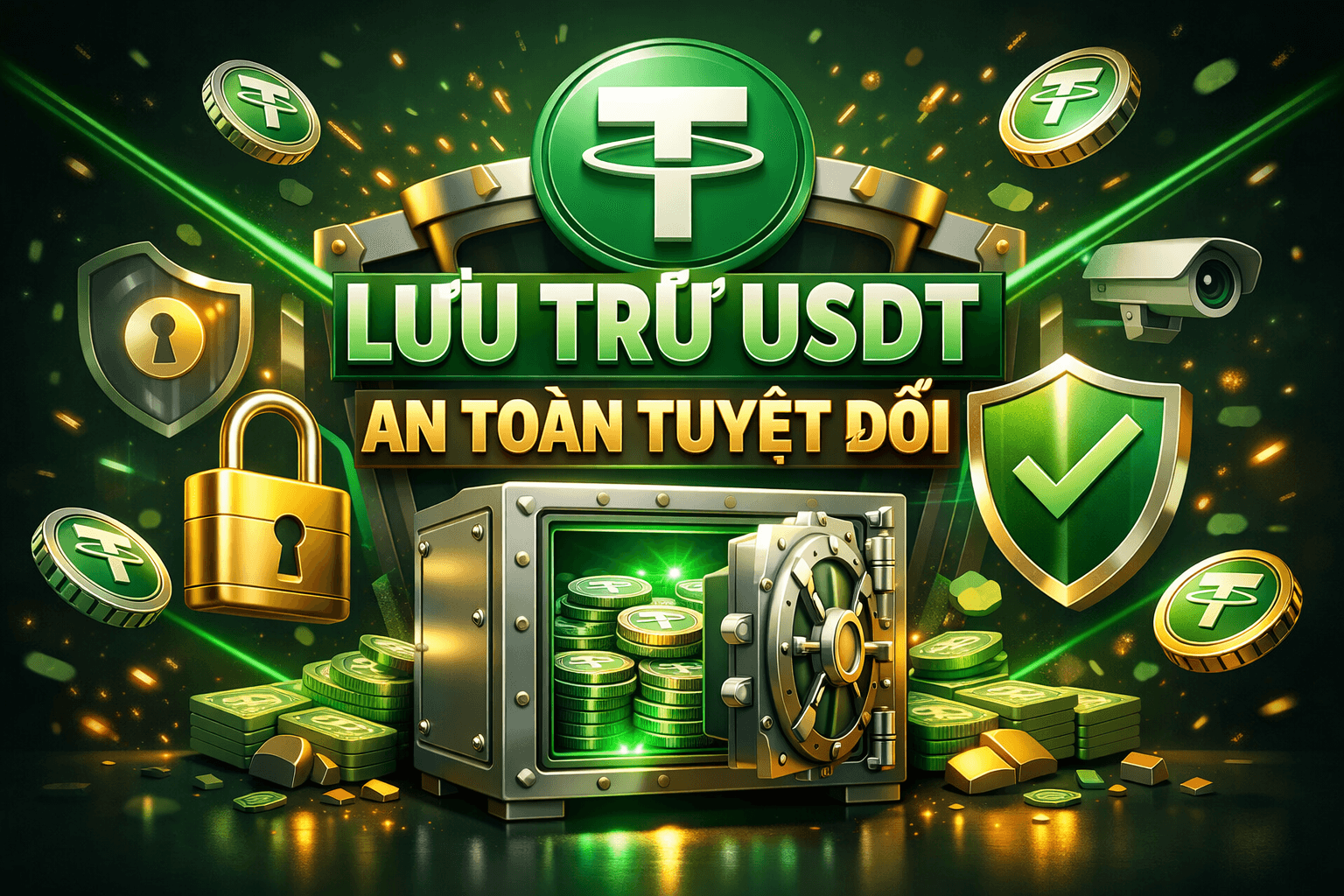
USDT is a popular stablecoin, widely used in transactions and payments.
However, keeping USDT safe is an important issue: a small mistake can lead to losing your entire balance.
This article guides you on how to choose the right USDT wallet, compare hot wallets and cold wallets, and share effective security strategies.
The Importance of Managing Your Private Key
What is a Private Key?
A Private Key is a unique password to access USDT in the blockchain wallet.
Whoever owns the Private Key controls the entire balance in the wallet.
Risks of Losing Your Private Key
Cannot recover if lost.
Can lead to permanent loss of USDT.
Advice: always write down, secure, and back up your Private Key/Seed Phrase.
Hot Wallet
Definition
Hot Wallet is a wallet connected to the Internet, easy to use, convenient for frequent transactions.
Popular Hot Wallets
Metamask: supports Ethereum, Binance Smart Chain, Polygon, etc.
Trust Wallet: multi-blockchain, easy to use on mobile.
Binance Wallet: directly integrated in the exchange, convenient for trading.
Advantages
Easy to access and quick transactions.
Integrates many blockchains, supports USDT ERC-20, TRC-20, Solana.
Suitable for small amounts of USDT and daily transactions.
Disadvantages
Connected to the Internet → higher risk of hacking.
Dependent on devices and apps.
Cold Wallet
Definition
A Cold Wallet is a wallet not connected to the Internet, stores the Private Key offline, maximizing security.
Popular Cold Wallets
Ledger Nano S/X: supports multiple tokens, high security.
Trezor: easy to use, supports many blockchains and USDT.
Paper Wallet: prints the Private Key/Seed Phrase on paper, not connected to the network.
Advantages
Absolutely safe from hacking, malware, and phishing.
Suitable for HODL, storing large amounts.
Disadvantages
Not convenient for daily transactions.
You need to be careful when backing up the Seed Phrase.
Comparison of Hot and Cold Wallets
Criteria | Hot Wallet | Cold Wallet |
Internet Connection | Yes | No |
Security | Average | High |
Convenience for transactions | Very convenient | Not convenient |
Suitable for | Daily transactions | Long-term storage, HODL |
Risk of loss | Higher | Lower |
Advice: Divide your USDT balance between hot and cold wallets, based on transaction needs.
Guidelines for Safe Wallet Use
Basic Security
Enable 2FA (Two-Factor Authentication) for all wallets and exchanges.
Do not share your Private Key or Seed Phrase with anyone.
Back up your Seed Phrase in a safe place, like a safe or store offline.
Check Wallet Address
Always compare the wallet address receiving USDT before transferring.
Send a test small amount first to verify.
Avoid Online Risks
Do not click on unknown links, do not download suspicious files.
Use secure browsers and devices when trading.
USDT Allocation Strategy
Hot Wallet: Store 10–30% of total balance, quick transactions, P2P or CEX exchange.
Cold Wallet: Store 70–90% of total balance, long-term capital protection.
Periodically monitor and evaluate the balance in hot wallets to rebalance.
This strategy helps ensure liquidity while maximizing safety.
Conclusion
Storing USDT safely is not just a technical issue, but also a financial risk management strategy.
Hot Wallet: convenient, fast, suitable for small transactions.
Cold Wallet: maximum security, suitable for HODL and large amounts.
The key to success: Divide your USDT evenly between hot and cold wallets, adhering to the principles of security, backup, address verification, and enabling 2FA.
When done right, you will keep USDT absolutely safe, reduce the risk of loss, and optimize your trading experience.